
DMX Digital Drum Machine
From Wikipedia, the free encyclopedia
About the DMX
https://en.wikipedia.org/wiki/Oberheim_DMX
Wikipedia did a pretty good job of introducing the DMX, so I don't need to bother. If ou are interested in more details and firsst hand stories of the development of DMX, check out "Evolution of the Programmable Digital Drum Machine"
The DMX is a programmable digital drum machine manufactured by Oberheim. It was introduced in 1980 at a list price of US$2,895 (equivalent to $11,300 in 2025) and remained in the company's product line until the mid-1980s.
The Oberheim DMX was the second digital drum machine ever to be sold as a commercial product, following the Linn LM-1 Drum Computer in 1980. Its popularity among musicians of the era contributed to the sound and evolution of 1980s new wave, synth-pop and hip-hop music.
Background
Immediately following the success of the Linn LM-1, other manufacturers began to develop and release drum machines intended to compete with the LM-1's ease of programmability and realistic sound quality. The DMX featured sampled sounds of real drums, as well as individual tuning controls for each drum voice and a swing function. In addition, it boasted several humanizing elements such as rolls, flams, and timing variations that were meant to mimic those of real drummers.
The DMX features 24 individual drum sounds derived from 11 original samples and allows for a maximum 8-voice polyphony; one voice per card. It also featured eight separate outputs for individual processing, and allowed up to 100 sequences and 50 songs. One of the distinguishing features of the DMX is that it allowed integration with Oberheim's proprietary interfacing system (the Oberheim Parallel Buss) that pre-dated MIDI and allowed Oberheim equipment to be synchronized with the machine. Later models included factory-fitted MIDI ports and third-party companies also manufactured MIDI interfaces for the DMX.
Drum and percussion samples are stored in EPROM chips placed on removable voice cards. The data format is 8-bit PCM using μ-law companding, increasing sound resolution to approximately 12 bits in the analog domain (a design technique also employed by other early drum machines, including products by Linn Electronics, E-mu Systems, and Sequential Circuits).
The DMX's punchy and realistic drum sound made it attractive towards many artists and producers involved in the fledgling hip-hop scene and it is featured on many of the genre's early landmark recordings. It is in continuous use in dancehall reggae music. Artists that have used the DMX include New Order on their 1983 single "Blue Monday"[3] and The Police on "Every Breath You Take" (kick drum only). Several artists derive their names from the drum computer, including DMX Krew, Davy DMX, and DMX.
If you are interested in more detail, check out "Evolution of the Programmable Digital Drum Machine"
Photos & Drawings
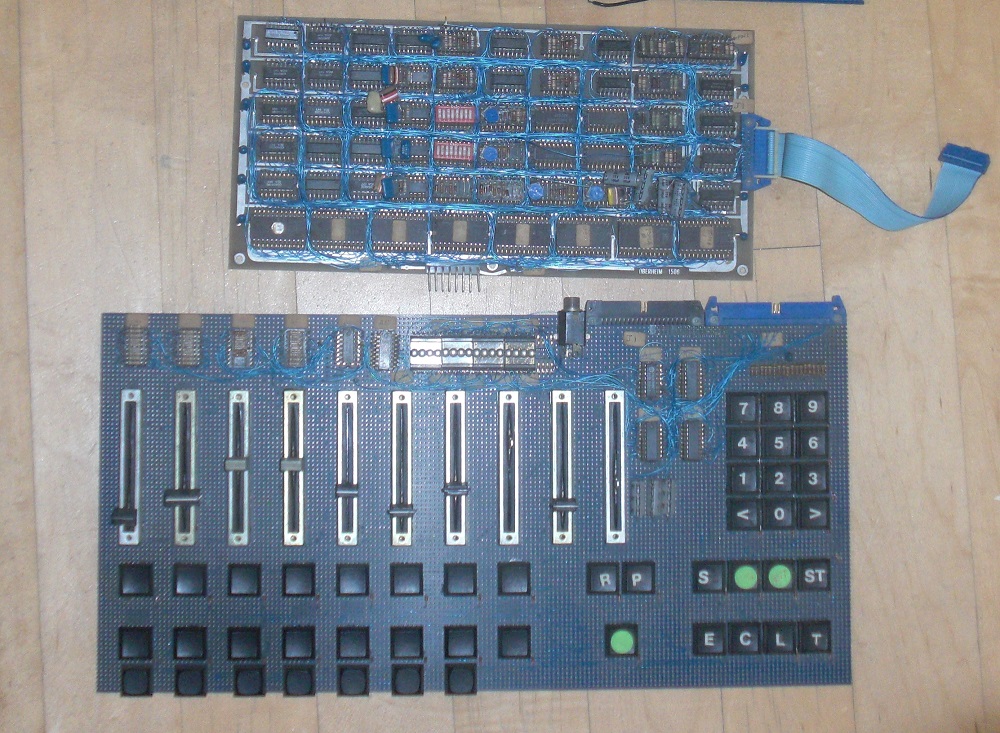 Original DMX Breadboard[/caption]
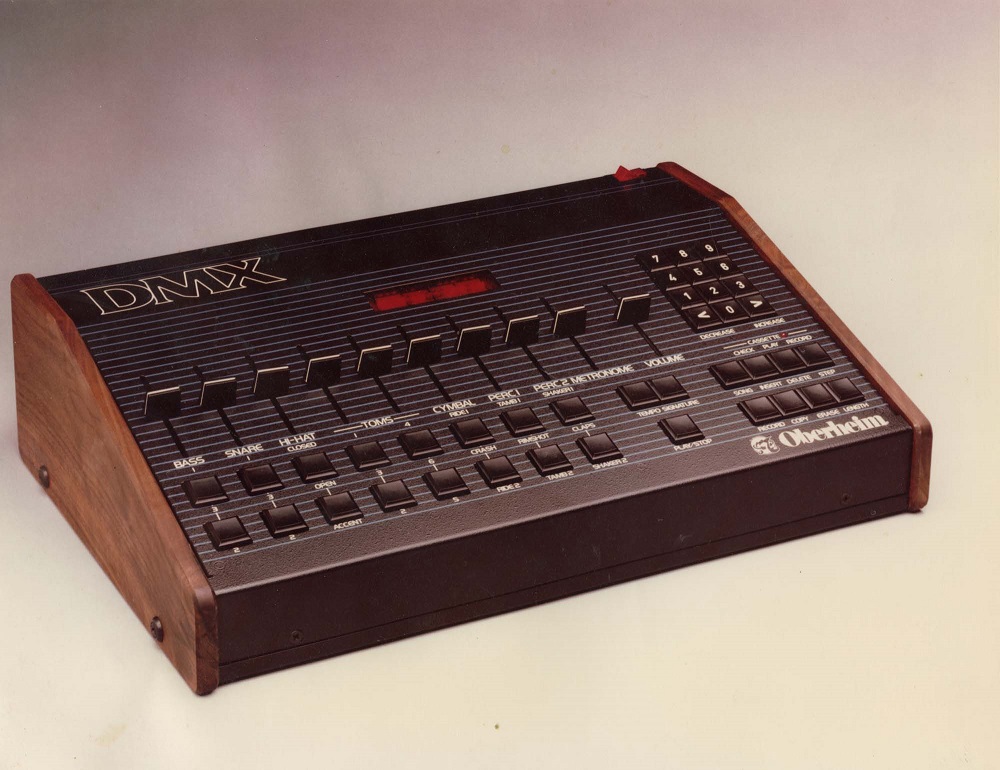
Original DMX prototype
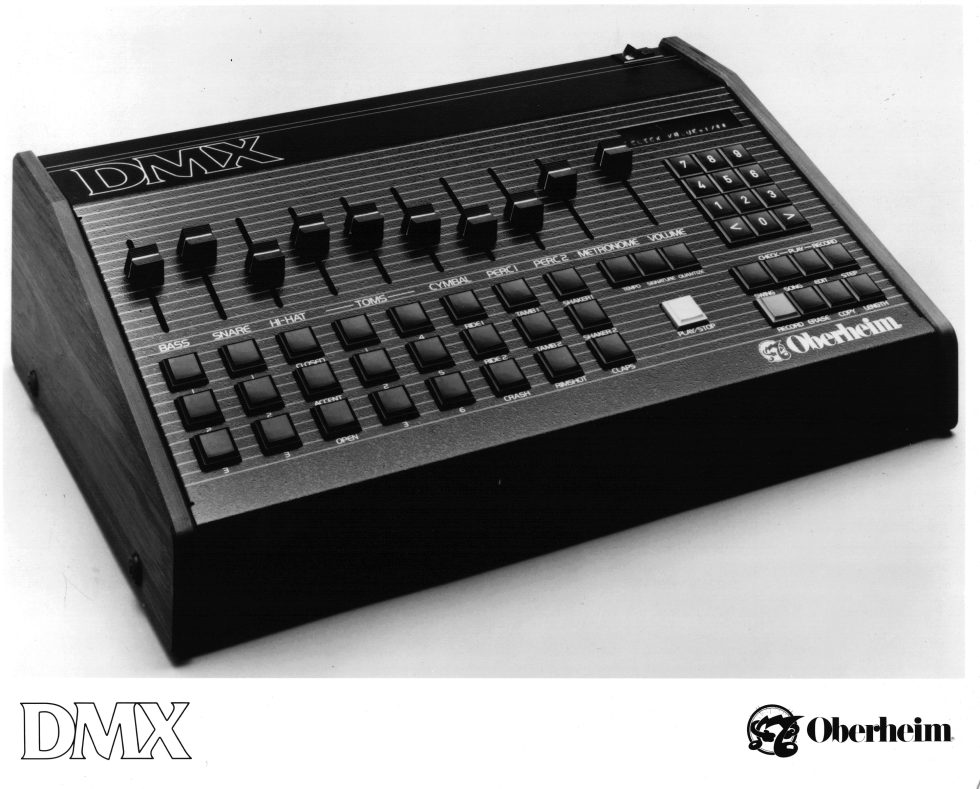
First Production DMX